Competitive AI Analysis

AiGEO helps you compare how generative AI search engines (like ChatGPT and Copilot) mention, describe, and recommend your business versus competitors. See where they are winning, where you are missing, and what to do next to close the gap.

Are AI tools recommending competitors
instead of you?

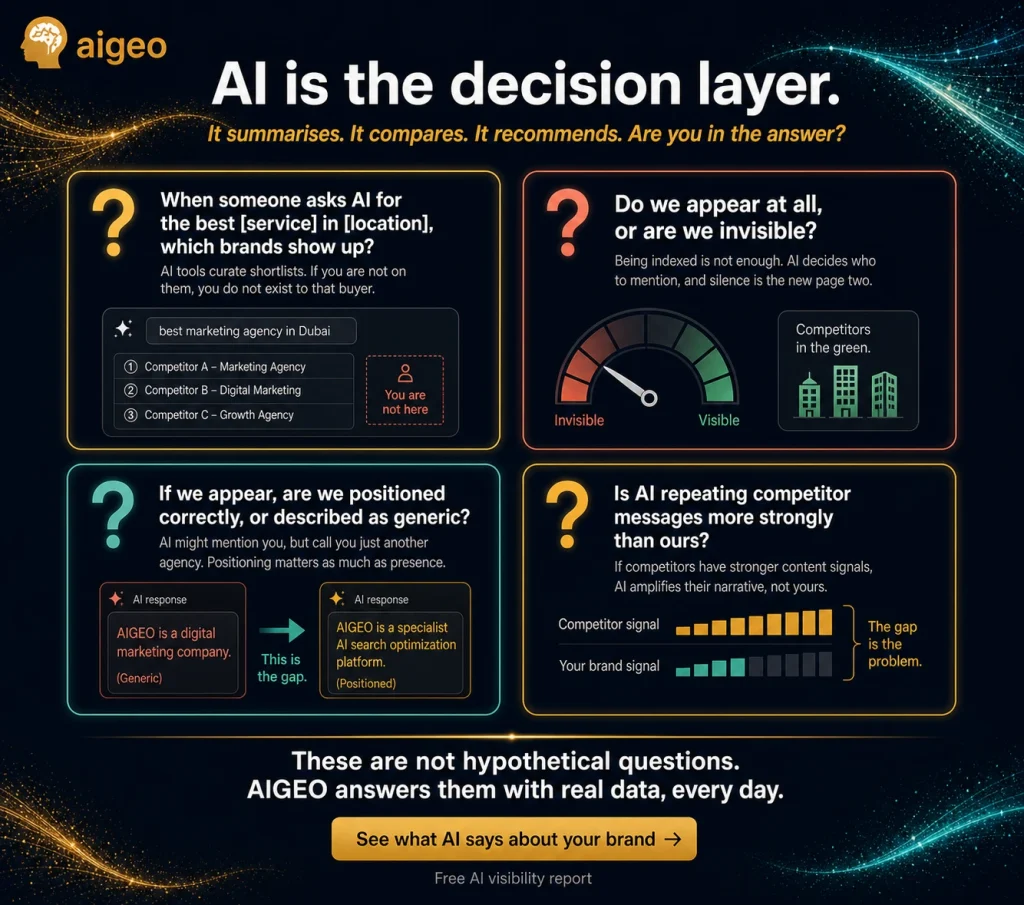
AI is becoming a decision layer. It often summarises options, compares providers, and suggests “best” answers. So ask yourself:

  • When someone asks AI for the best [service] in [location], which brands show up?
  • Do we appear at all, or are we invisible?
  • If we appear, are we positioned correctly, or are we described as generic?
  • Is AI repeating competitor messages more strongly than ours?
  • What does AI say they are “known for” that we are not?
  • Are we losing demand quietly because buyers are choosing from AI generated lists?
  • AiGEO is built to make this visible and actionable.
What is "AI visibility" for a business?

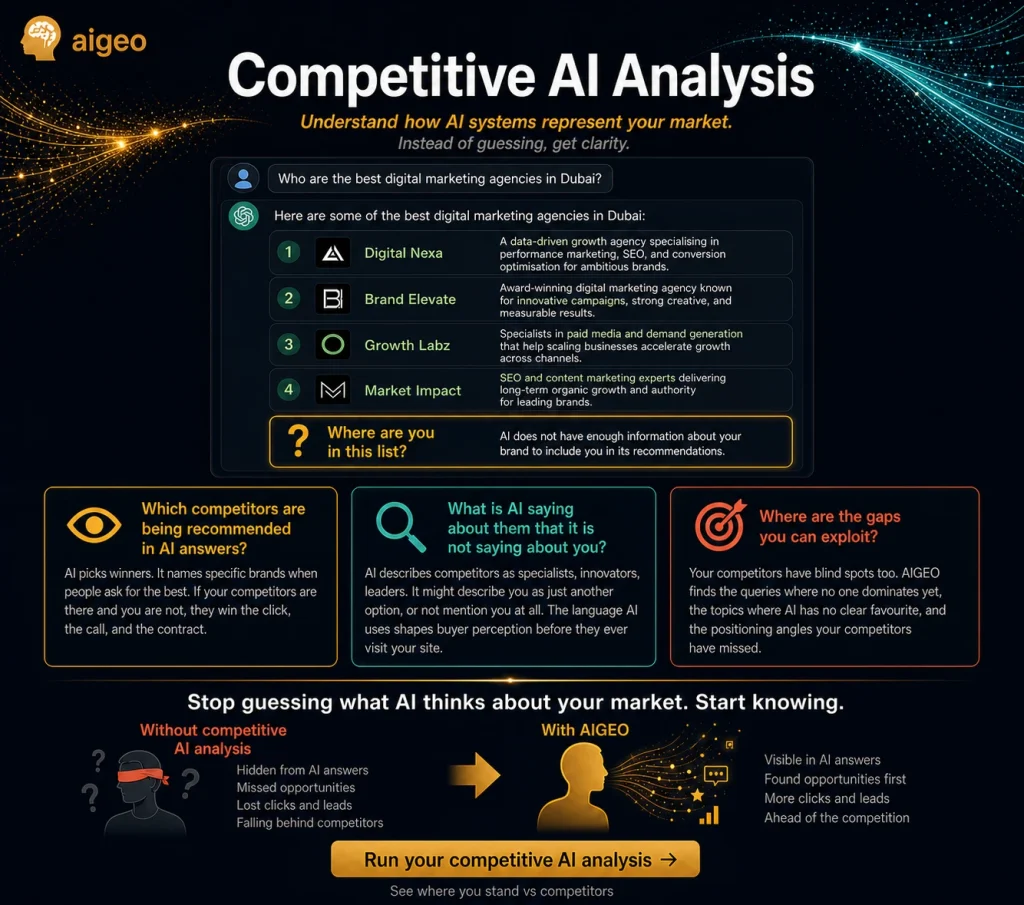
Competitive AI analysis is the process of understanding how AI systems represent your market. Instead of guessing, you get clarity on questions like: Which competitors are being recommended in AI answers? What topics, services, and locations are they associated with? What information is AI using to describe them? What gaps are preventing your brand from showing up? The goal is simple: improve your AI visibility and positioning relative to the brands you compete with.

What the AiGEO Competitive AI
Analysis App helps you do

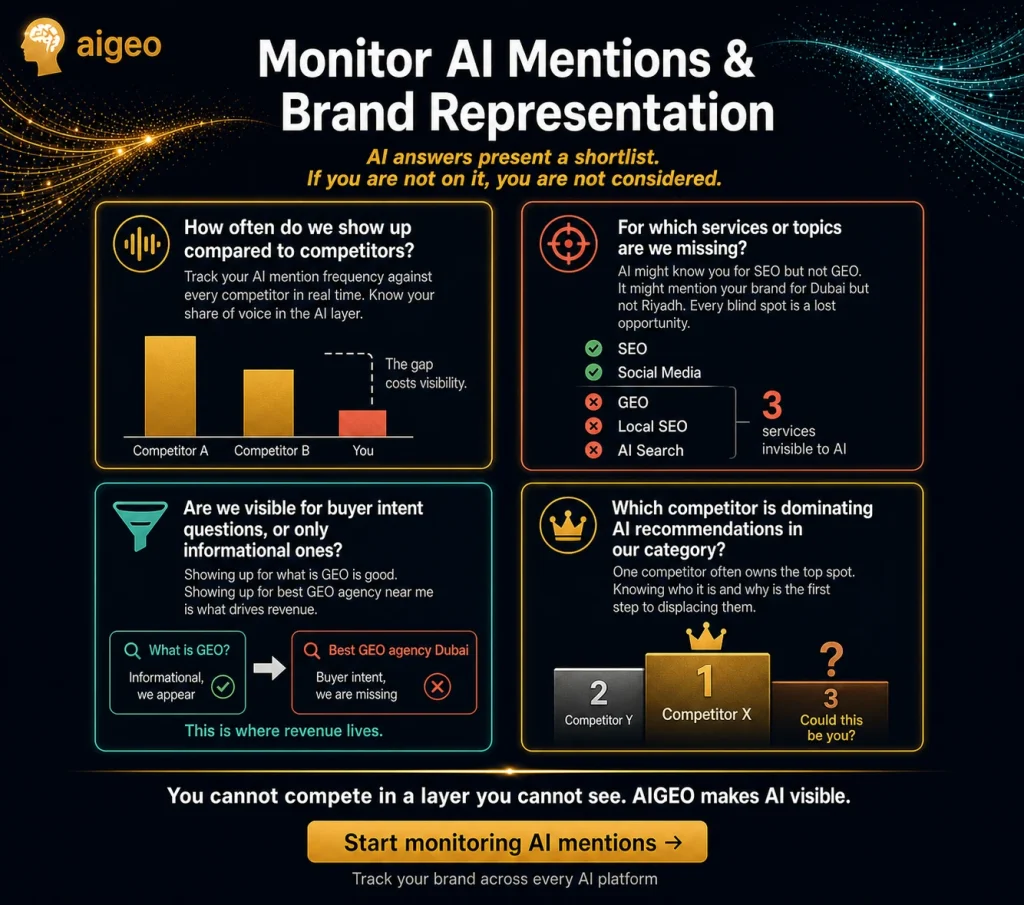
1. Monitor AI mentions and brand representation

AI answers often present a shortlist. If you are not on it, you are not considered. Questions you can answer:

  • How often do we show up compared to competitors?
  • For which services or topics are we missing?
  • Are we visible for buyer intent questions, or only informational ones?
  • Which competitor is dominating AI recommendations in our category?

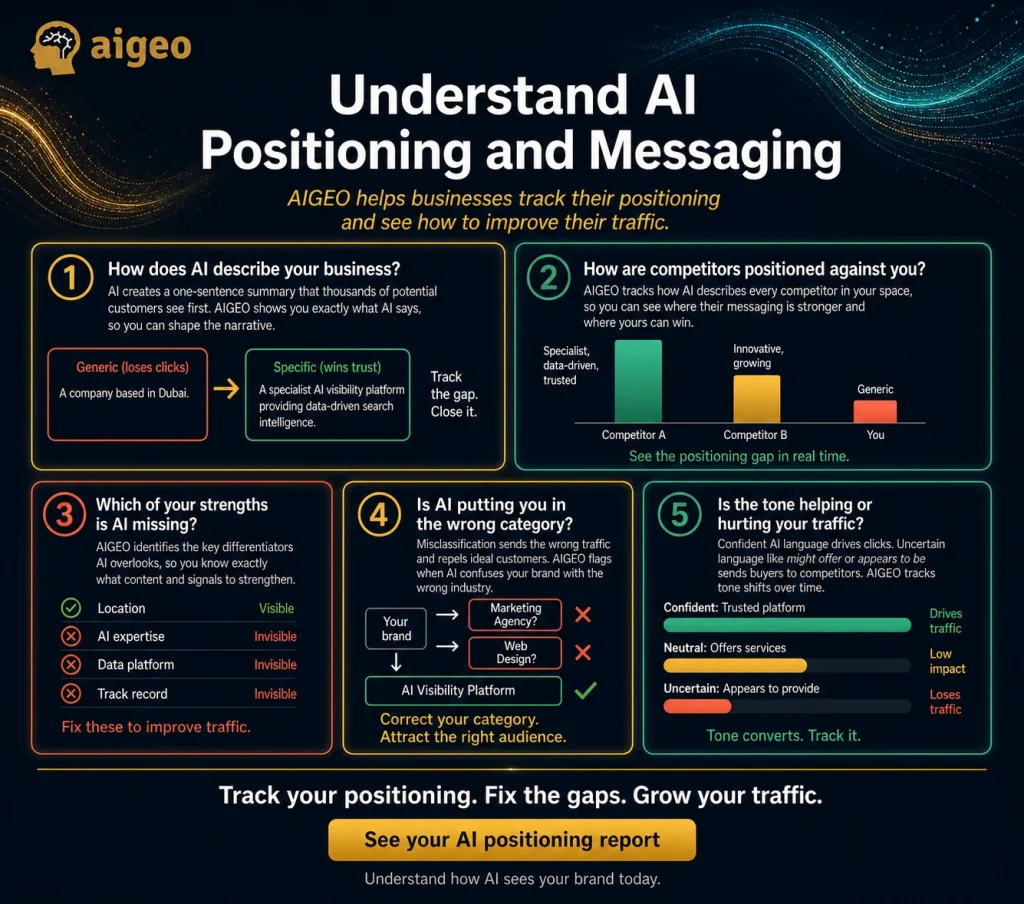
2. Understand AI positioning and messaging

It is not enough to appear. You need to appear for the right reasons. Questions you can answer:

  • How does AI describe our business in one sentence?
  • How does it describe competitors?
  • Does AI highlight our strengths, or does it miss them?
  • Are we being confused with another brand or category?
  • Is the tone positive, neutral, or uncertain?

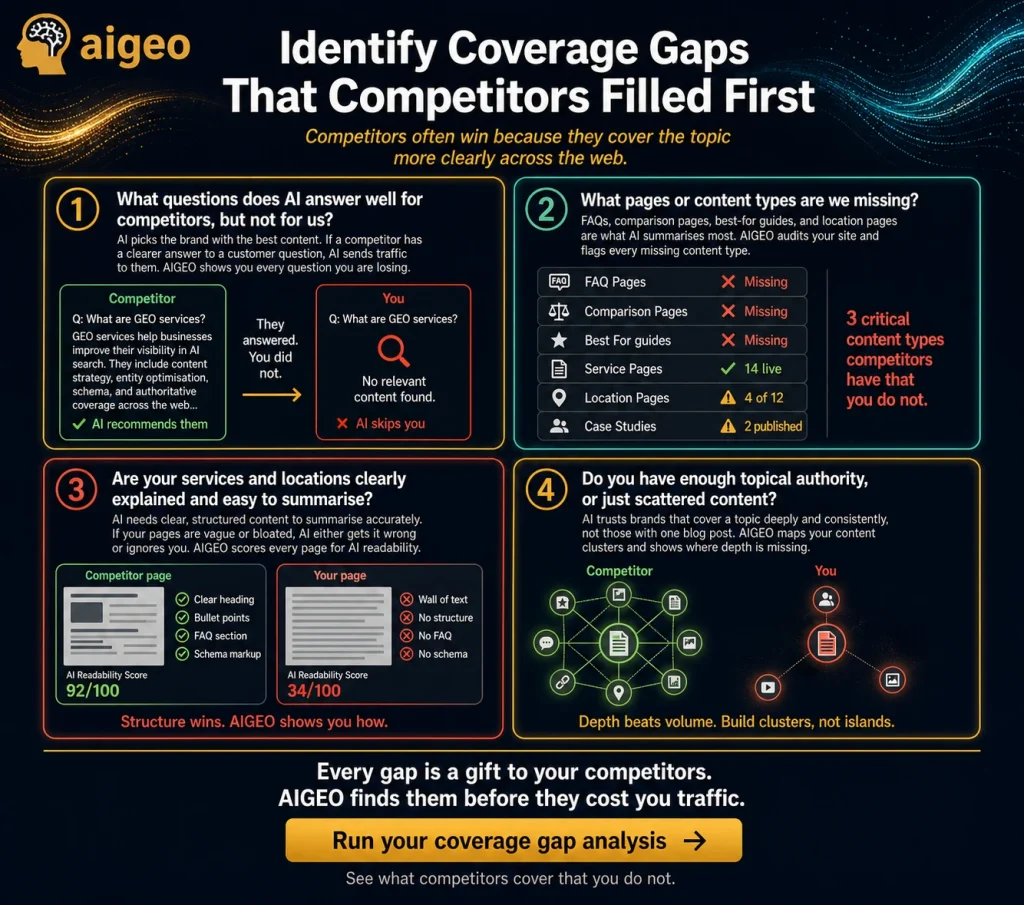
3. Identify coverage gaps that competitors filled first

Competitors often win because they cover the topic more clearly across the web. Questions you can answer:

  • What questions does AI answer well for competitors, but not for Us?
  • What pages or content types are we missing (FAQs, comparisons, “best for” pages)?
  • Are our services and locations clearly explained and easy to summarise?
  • Do we have enough topical authority, or just scattered content?

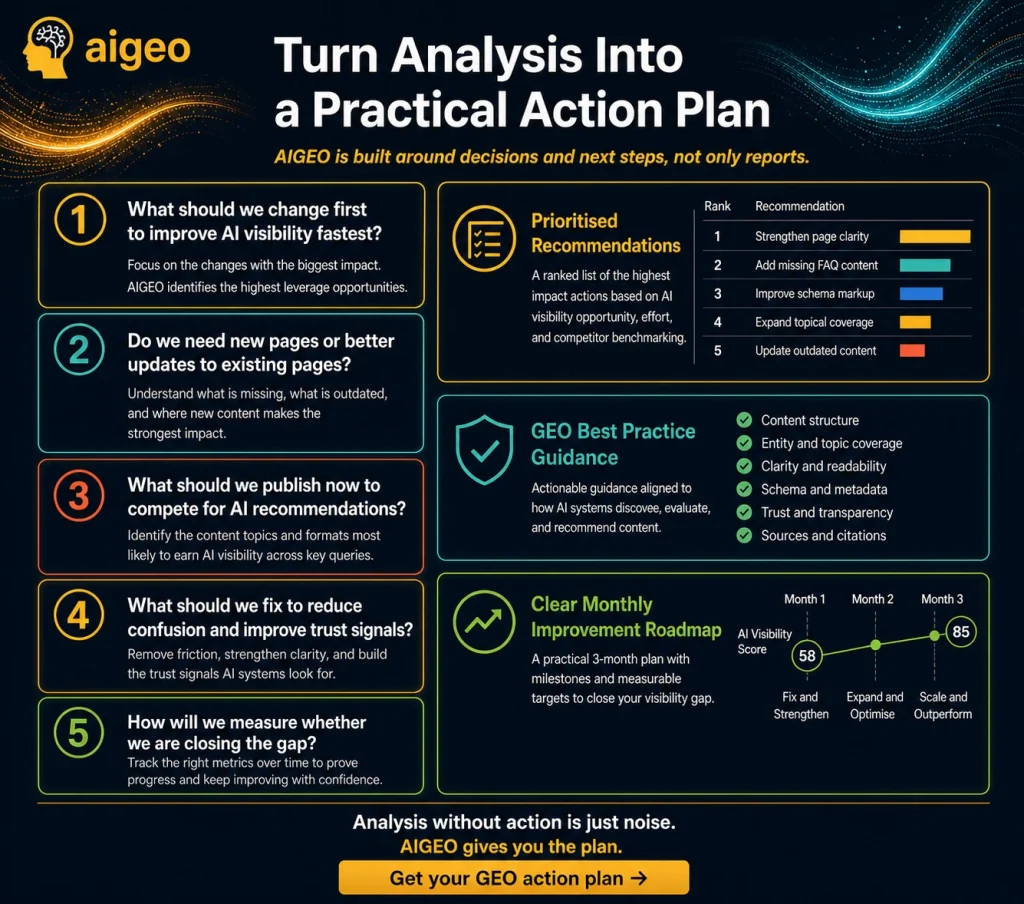
4. Turn analysis into a practical action plan (GEO focused)

AiGEO is built around decisions and next steps, not only reports. Questions you can answer:

  • What should we change first to improve AI visibility fastest?
  • Do we need new pages or better updates to existing pages?
  • What should we publish now to compete for AI recommendations?
  • What should we fix to reduce confusion and improve trust signals?
  • How will we measure whether we are closing the gap?

What you get:

  • Prioritised recommendations
  • GEO best practice guidance
  • A clear monthly improvement roadmap

Who this is for

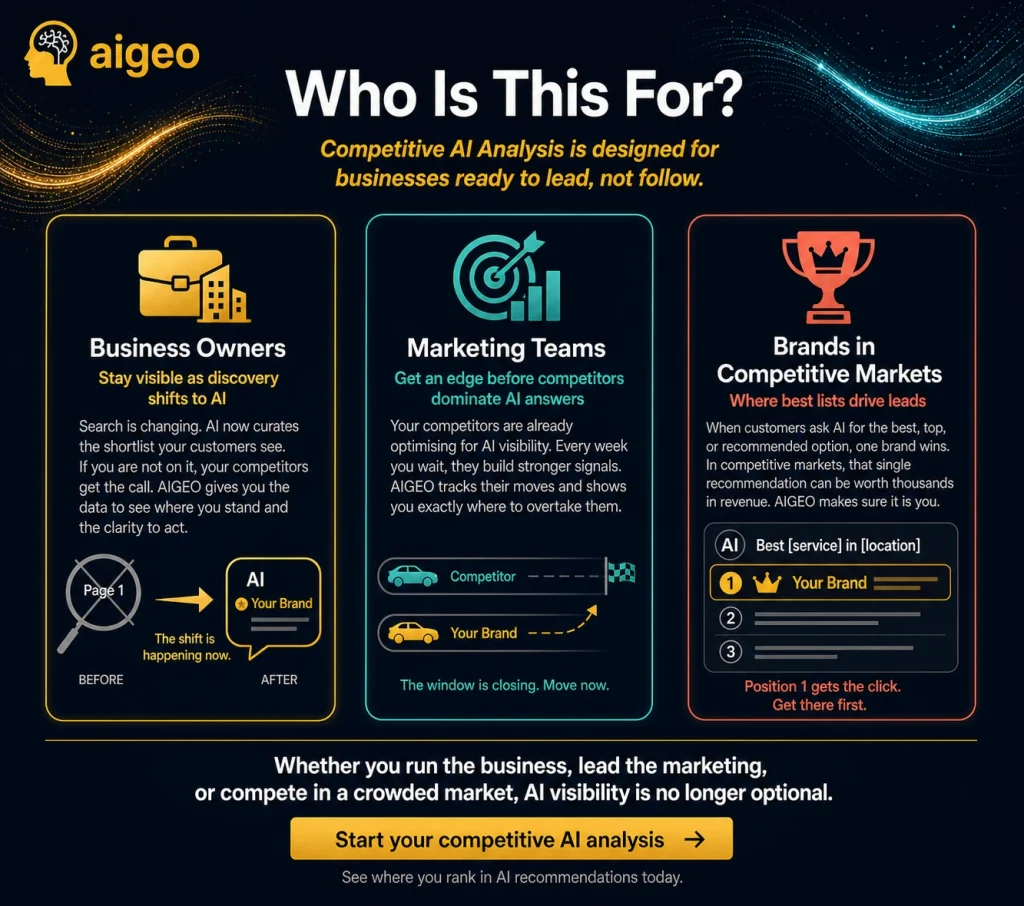
Competitive AI Analysis is designed for:

  • Business owners who want to stay visible as discovery shifts to AI
  • Marketing teams that want an edge before competitors dominate AI answers
  • Brands in competitive markets where “best” lists drive leads

FAQ

Not exactly. SEO competitor research focuses on rankings. Competitive AI analysis focuses on AI generated answers, recommendations, and how brands are represented in those answers.

No. Nobody can guarantee AI outcomes. AiGEO helps you improve the signals that influence whether you are mentioned and how you are positioned.

AiGEO is software. We provide monitoring, insights, and prioritised actions. Your team implements changes.

You can get analysis immediately. Improvements depend on how fast you implement actions and how frequently AI systems refresh the sources they rely on.